FATF Targeted Report on Stablecoins & Unhosted Wallets
The Financial Action Task Force (FATF) has released its March 2026 Targeted Report on Stablecoins and Unhosted Wallets, focusing on the evolving risks of peer-to-peer (P2P) transactions. As stablecoins become a cornerstone of both the virtual asset ecosystem and traditional finance (with over 250 stablecoins in circulation and reaching a market cap exceeding USD 300 billion by mid-2025) their role in illicit finance has also intensified.
The report underscores that stablecoins are now the most popular virtual asset used in illicit transactions, accounting for 84% of illicit transaction volume in 2025.
Key Findings: The Illicit Landscape
The FATF identifies several ways threat actors are currently exploiting stablecoins:
● Proliferation Financing: DPRK-linked groups (like Lazarus) and Iranian actors utilize stablecoins to launder stolen funds and procure prohibited military equipment, often bypassing traditional banking via USDT on the Tron blockchain.
● Money Laundering & Fraud: Criminals favor stablecoins for their price stability and liquidity to move proceeds from "pig butchering," ransomware, and drug trafficking.
● Terrorist Financing: Groups like ISIL and Al-Qaeda are increasingly soliciting donations in stablecoins, using "micro-splitting" and multi-hop transfers to evade detection.
The P2P & Unhosted Wallet "Loophole"
A primary concern for regulators is the rise of P2P transactions via unhosted wallets, and oftentimes these transactions involve stablecoins given their price stability and ample liquidity. These transactions occur without AML/CFT-obliged intermediaries, making them inherently higher risk. While blockchain analytics can provide visibility, the pseudonymous nature of these wallets allows criminals to obscure their identities through frequent address rotation and "chain-hopping" across different blockchains.
Good Practices for the Private Sector
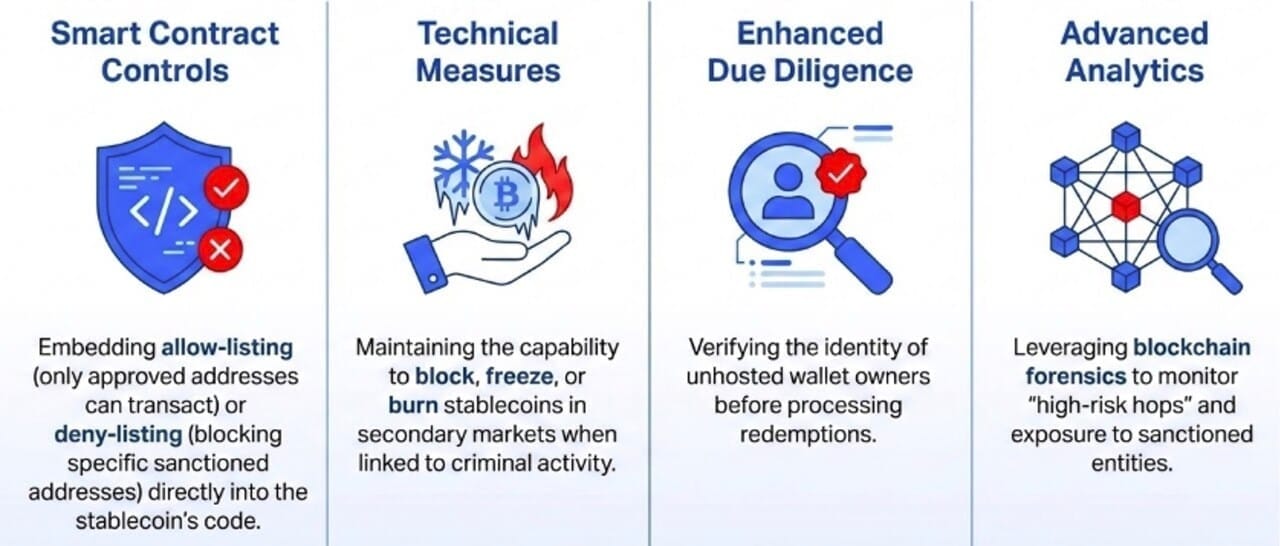
The report highlights proactive measures that VASPs and issuers can implement to mitigate these risks:
Jointly Mitigating these Risks
The FATF emphasises that all VASPs should adopt risk mitigating measures in accordance with its recommendations. Considering the borderless and immediate nature of the industry, it is then incumbent upon jurisdictions and VASPs to jointly mitigate the above risks together.
VerifyVASP has and remains committed to a public-private framework in this joint effort as summarised below.
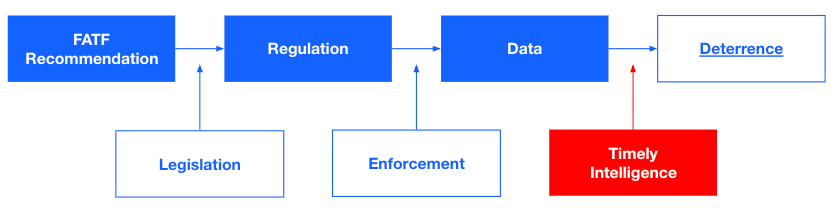
Starting with the FATF Recommendations, which is adopted in jurisdictions through regulations underpinned by legislation. These regulations will then need to be enforced effectively in order for objectives-based compliance that results in good-quality transactional data that will provide timely intelligence for the industry (both public and private) to jointly deter or recover assets illicit activity on the blockchain.
The following relevant tools and initiatives from VerifyVASP’s industry-proven suite of services and products for objective-based Travel Rule compliance is how the public sector and VASPs can respond in relation to this Targeted Report.
- VerifyWallet - a scalable solution that VASPs can implement to verify that their customers have control over self-hosted wallets using key signing technologies within the VASPs own secured environment.
- Law Enforcement Solutions - an Artificial Intelligence (AI) driven tracing tool offered to public sector (Law Enforcement Agencies, Financial Intelligence Units and Regulators) for effective and quick tracing by combining blockchain data with VerifyVASP’s own verified transactional information accumulated through objective-based Travel Rule compliance.
- Public Private Partnerships (PPP) - VerifyVASP is an active participant in various PPP established internationally and regionally to jointly combat illicit activity in the industry.
There have already been encouraging early results from the adoption of this framework. However, its full potential can only be realised through the industry’s continued commitment to responsible conduct and collective efforts to foster sustainable sector-wide growth. As the virtual asset ecosystem evolves rapidly, so too do illicit actors and the associated risks. Accordingly, the framework can only achieve its intended outcomes through close collaboration across the industry and with public-sector stakeholders.
At VerifyVASP, we are committed to advancing this collaborative approach through technical breakthroughs and industry cooperation. Our goal is to strengthen transparency, compliance, and security in virtual asset transactions. We work closely with industry participants, regulators, and law-enforcement authorities to reinforce the integrity of the global virtual asset ecosystem.